Essential Table Saw Accessories for Beginners
Essential table saw accessories play a major role in both safety and accuracy, especially for beginners learning to work confidently in the workshop. While many first-time users focus on the saw itself, the right accessories can dramatically reduce risk and improve the quality of every cut.
Simple tools like push sticks, featherboards, and proper safety gear help prevent common accidents while giving you better control over your material. These accessories are not optional extras — they are part of a safe and effective table saw setup.
If you are new to using a table saw, it is also worth reviewing our guide to table saw safety tips for first-time users, which explains the core habits every beginner should develop before making their first cuts.
This guide covers the most important essential table saw accessories for beginners, focusing on equipment that improves safety, precision, and confidence in everyday workshop use.
Why Table Saw Accessories Matter
Table saw accessories are designed to solve two major problems: preventing injury and improving cutting accuracy. Many workshop accidents happen when material is poorly supported or when hands get too close to the blade. Accessories create safer working distances and better control over the workpiece.
They also make cutting more predictable. When material moves smoothly and stays properly aligned, you are less likely to experience kickback, binding, or uneven cuts. This is especially important for beginners who are still developing consistent technique.
Modern table saws often include built-in safety features, and choosing a model with strong safety design is just as important as learning proper technique. Our guide to the best professional table saws in Australia explains which features to look for when selecting a reliable saw.
For new users, accessories act as an extra layer of protection and guidance. They help build confidence while reinforcing safe habits that will carry over into more advanced woodworking projects.
Essential Safety Accessories
The most important table saw accessories are those that directly improve safety. These tools are designed to keep your hands at a safe distance from the blade, stabilise the material during cuts, and reduce the risk of kickback. For beginners, learning to use these accessories correctly is just as important as learning basic cutting technique.
Push Sticks and Push Blocks
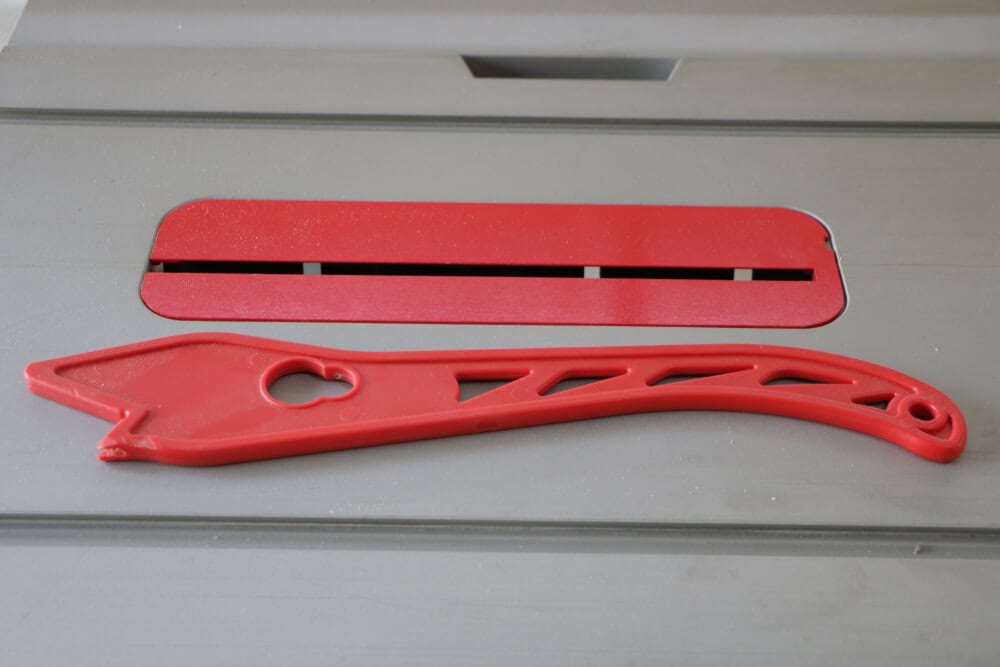
Push sticks and push blocks are among the most essential safety accessories for any table saw user. Their primary purpose is to keep your hands safely away from the blade while maintaining firm control over the material.
Push sticks are typically used for narrow rip cuts where your hands would otherwise pass close to the blade. Push blocks provide a wider surface area and better downward pressure, which helps keep the workpiece stable and flat against the table.
Using push sticks and push blocks consistently reduces the risk of accidental contact with the blade and improves control during difficult cuts. Beginners should make a habit of reaching for a push stick whenever their hands would come within a safe margin of the blade.
Featherboards
Featherboards are designed to hold the workpiece firmly against the fence or table, preventing sideways movement during a cut. This added stability improves accuracy and significantly reduces the chance of kickback.
By applying consistent pressure, featherboards help the material feed smoothly through the blade without drifting. They are especially useful when cutting long boards or working with stock that may twist or shift during the cut.
For beginners, featherboards act as an extra set of hands, making it easier to maintain proper alignment and safe feeding technique.
Riving Knives and Blade Guards
Riving knives and blade guards are built-in safety components on most modern table saws, and they should always be used whenever possible. A riving knife helps prevent the cut material from pinching the blade, which is a major cause of kickback.
Blade guards provide a physical barrier between the operator and the spinning blade while still allowing clear visibility of the cut. Although some users remove guards for certain operations, beginners should keep them installed whenever the cut allows.
If you are comparing entry-level machines, it is important to consider how effective these safety features are. Our article on whether cheap table saws are worth it explains how safety design varies between budget and higher-end models.
Outfeed Support and Stands
Outfeed tables and roller stands support long or heavy material as it exits the saw. Without proper support, boards can tip downward, causing binding or loss of control.
Providing stable outfeed support allows the material to move smoothly through the cut, improving both safety and accuracy. Even a simple portable stand can make a noticeable difference when working with larger pieces.
For beginners setting up a small workshop, adding basic outfeed support is a practical way to reduce strain and maintain better control over every cut.
Accessories That Improve Accuracy
While safety is the top priority, certain table saw accessories are designed to improve cutting accuracy and consistency. These tools help produce cleaner cuts, tighter joints, and more predictable results, which is especially valuable for beginners learning proper technique.
Miter Gauge Upgrades
The standard miter gauge included with many table saws is often basic and may allow slight movement during cuts. Upgrading to a more precise miter gauge improves angle accuracy and makes crosscuts more consistent.
A high-quality miter gauge provides smoother adjustment, clearer angle markings, and better support for the workpiece. This results in cleaner cuts and reduces the need for repeated corrections.
For beginners, a reliable miter gauge helps build confidence by making angled and crosscut operations easier to control.
Zero-Clearance Inserts
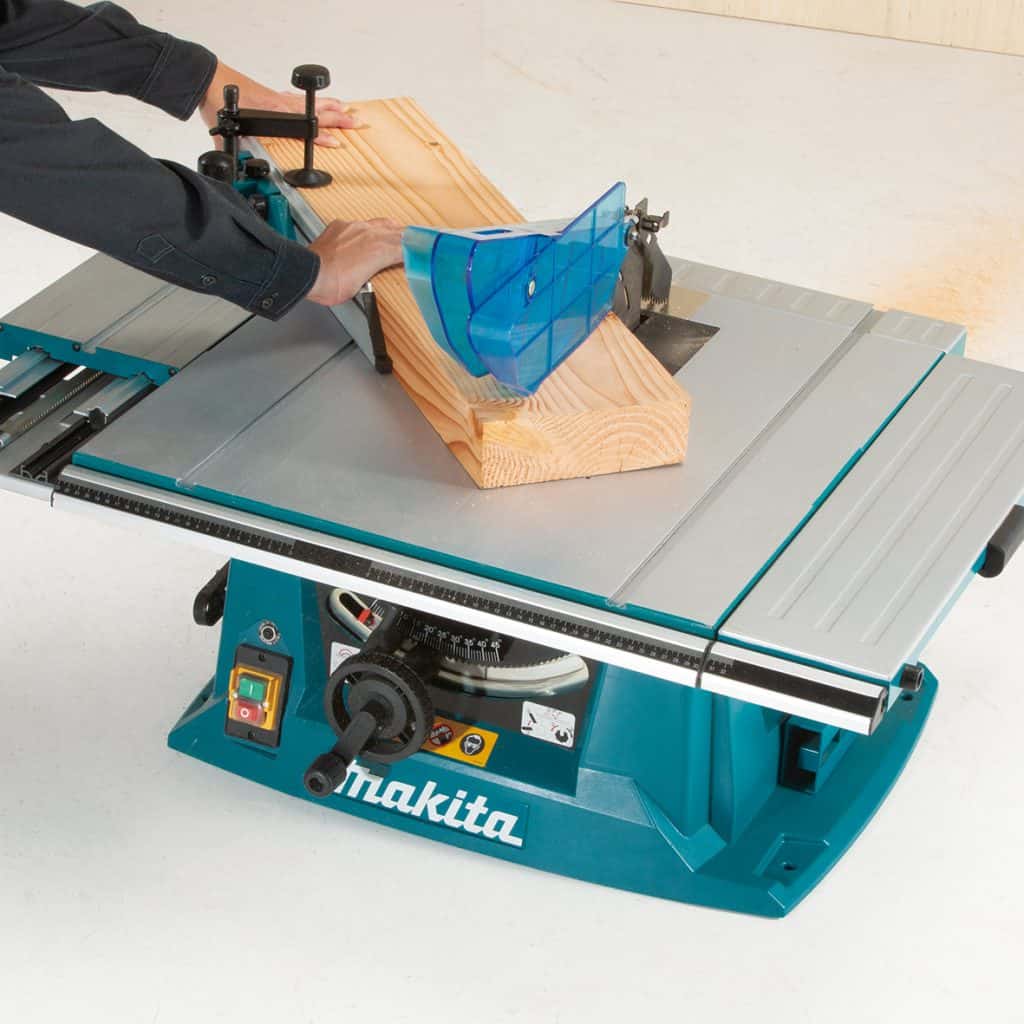
A zero-clearance insert replaces the standard throat plate around the blade with a tighter opening. This reduces tear-out on the underside of the material and prevents small offcuts from falling into the blade cavity.
Cleaner cuts are especially noticeable when working with plywood, melamine, or veneered boards. The added support around the blade also improves overall safety by stabilising smaller pieces.
Zero-clearance inserts are an inexpensive upgrade that can significantly improve cut quality for both beginners and experienced users.
Safety Gear Every Beginner Should Own
In addition to table saw accessories, personal safety gear is essential for protecting yourself in the workshop. Even with proper technique and equipment, flying debris and noise present real risks.
- Safety glasses or goggles to protect your eyes from chips and dust
- Hearing protection to reduce long-term exposure to loud noise
- Dust masks or respirators when cutting materials that produce fine particles
- Proper fitted clothing and non-slip footwear for stable footing
These items work alongside your table saw accessories to create a safer working environment. For a broader overview of safe workshop habits, see our guide to table saw safety tips for first-time users.
How to Prioritise Accessories on a Budget
Beginners do not need to buy every accessory at once. A smart approach is to prioritise the tools that offer the greatest safety benefits first, then expand your setup over time.
Start with push sticks or push blocks, basic featherboards, and essential personal safety gear. These items are affordable and provide immediate improvements in safety and control.
Accuracy-focused upgrades such as miter gauges and zero-clearance inserts can be added later as your skills develop. Even if you are working with an entry-level machine, investing in key accessories can noticeably improve performance.
If you are choosing between entry-level saws, our guide on whether cheap table saws are worth it explains how to balance cost, features, and safety.
Conclusion
Table saw accessories are an essential part of building a safe and accurate workshop setup. For beginners, the right tools reduce risk, improve control, and make learning proper technique much easier.
By prioritising core safety accessories first and adding accuracy upgrades over time, you can create a setup that grows with your skills. Safe habits and proper equipment work together to produce better results and a more confident woodworking experience.
Next Steps
Want to learn more about choosing and using table saws? Explore our related guides: